Your home is a constant flurry of activity. Toys multiply, school bags become trip hazards, and simply getting a glass of water from the kitchen to the stoep can feel like navigating a maze. You yearn for a peaceful family sanctuary, but instead, you are living in an obstacle course.
This is the daily reality for the Growth Parent, where traditional layouts and “precious” decor clash with the joyful chaos of family life. This creates a significant Designer Gap, turning your dream home into a source of stress, especially when your living room feels cluttered.
Kids vs. Decor: The Unwinnable Battle
The idea of a pristine, show-home lounge is often at odds with the demands of children. We often try to force family life into a layout that was never designed for it.
-
The “No-Go Zones”: Do you have areas in your home that are constantly off-limits to kids? This suggests a layout that prioritises aesthetics over functionality. It creates friction and unnecessary rules, hindering the natural flow of family life.
-
Fragile Fantasies: That delicate glass coffee table or the light-coloured fabric sofa might look beautiful, but in a home with active children, it is a constant source of anxiety. This is often the real cost of cheap furniture, where items are not built for resilience.
-
Storage Struggle: Children come with a lot of “stuff.” Without integrated, practical storage solutions, toys, books, and art supplies quickly overrun living areas, transforming them into battlefields rather than functional family zones.
Why “Precious” Furniture is a Mistake
In a family home, every piece of furniture should earn its place by being both beautiful and resilient. “Precious” furniture, ironically, often becomes the most expensive. This highlights the hidden cost of safe choices.
-
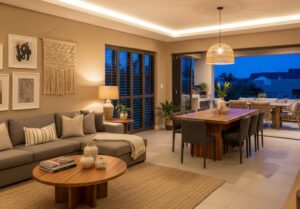
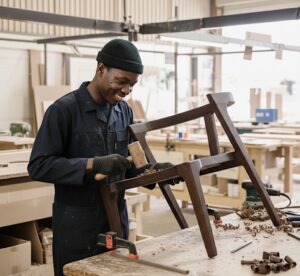
Durability Over Delicacy: Invest in robust materials that can withstand spills, bumps, and constant use. Think solid timber tables, performance fabrics, and locally handcrafted pieces that are built to last.
-
Versatility is Key: Furniture that serves multiple purposes is a game-changer for busy families. Ottomans with storage, expandable dining tables for homework, or modular sofas that adapt to different activities are invaluable. This aligns with why your home needs less furniture, not more.
-
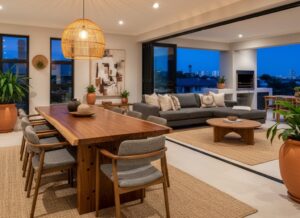
Embracing the “Great Indoors”: South African family life often revolves around the connection between indoor and outdoor spaces. A layout that facilitates easy movement between the kitchen, lounge, and braai area on the stoep enhances family connection, even when considering “Security-First” design elements.
The Local Story: The Van der Merwe Family in a Centurion Cluster
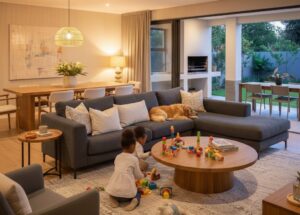
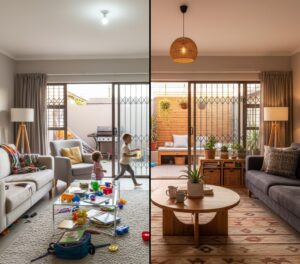
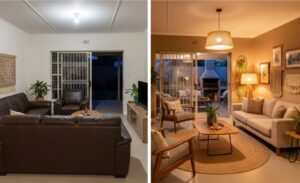
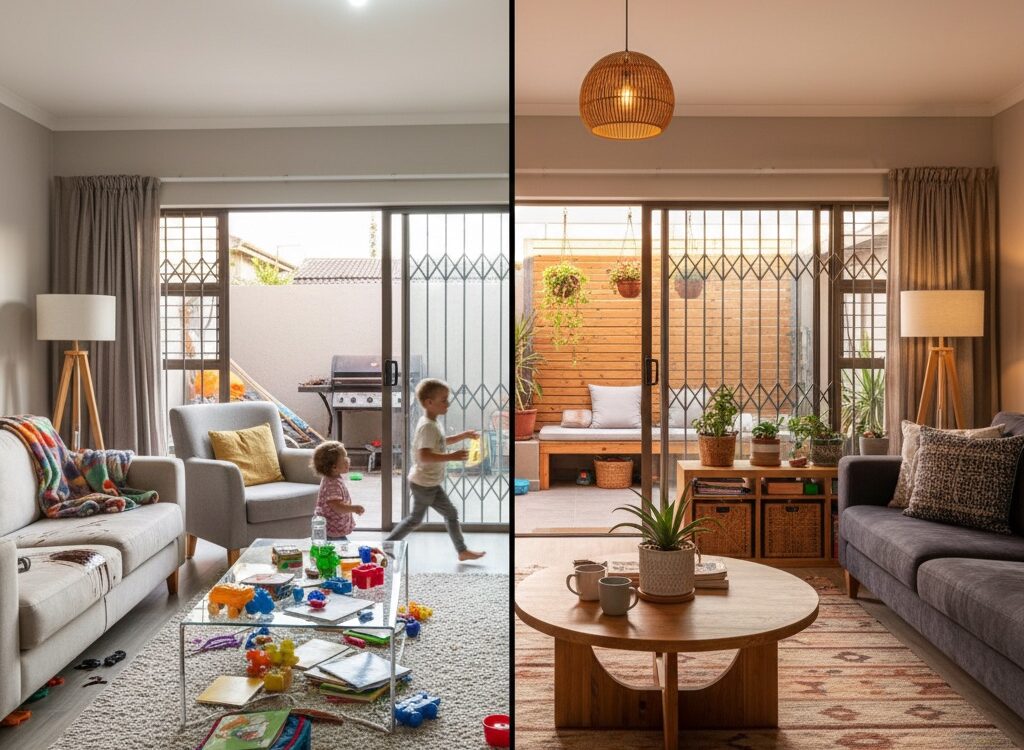
The Van der Merwe family, living in a vibrant Centurion cluster, faced constant friction in their open-plan living area. With two energetic young children, their expensive yet fragile imported coffee table was a daily stressor. The beautiful, light-coloured rug in the lounge was perpetually stained, and pathways to the stoep felt like an obstacle course of scattered toys. Even though they had invested significantly, their home was far from the peaceful sanctuary they craved, proving why a house full of premium furniture can still feel like an unfinished project.
Their “Designer Gap” was attempting to fit their dynamic family into a static, “adult-only” layout. By re-evaluating their actual needs, they opted for a round, solid timber coffee table, replaced the delicate rug with a durable, patterned alternative, and integrated clever, easily accessible storage. Their lounge transformed from a perilous zone into a flexible, comfortable space where kids could play freely, and adults could relax, a testament to the fact that great taste isn’t enough to make a room feel finished.
The “Aha!” Moment: It is the Layout, Not the Kids
The profound realisation for many Growth Parents is this:
“The reason my house is stressful isn’t the kids; it’s the layout.”
This mental shift empowers you to stop fighting against your family’s reality and start designing for it. By focusing on a layout that prioritises intuitive movement, resilient materials, and smart storage, you can transform your home from a daily obstacle course into a functional, beautiful, and truly calm sanctuary. It is about designing with purpose and functionality, not gambling with your home comfort.