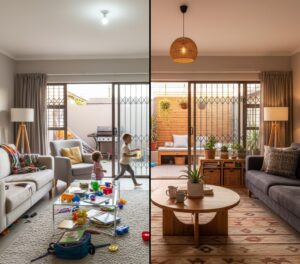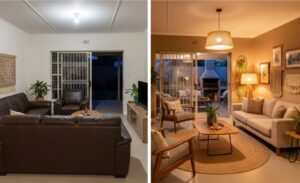
Have you ever brought home a beautiful piece of furniture only to realise it somehow makes your living room feel smaller or unbalanced?
This common experience is often referred to as the showroom trap. It occurs when individual items are selected in isolation without a clear plan for how those pieces will actually function within the unique constraints of a specific home. To avoid this, you need a simple space planning strategy before you start shopping.”.
The Inside Out Method is an approach that prioritises human experience and structural integrity over surface-level aesthetics.
1. The Inside: Human Lifestyle and Structural Integrity
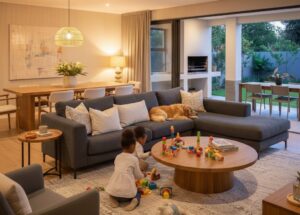
Every balanced room starts with the people inside it. Before considering aesthetics, it is essential to ask how the space is actually used. A room designed for quiet morning reflection requires a different layout than a high-traffic zone meant for family gatherings.
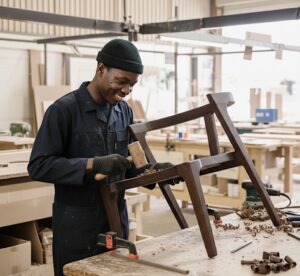
The inside also refers to what is beneath the fabric. Real quality is defined by the skeleton of the furniture. Prioritising solid oakwood frames and high-density support ensures permanent comfort. When the internal structure is sound, the furniture serves as a lasting foundation for the room rather than a temporary fixture that loses its shape over time.
2. The Out: Spatial Flow and Purposeful Placement
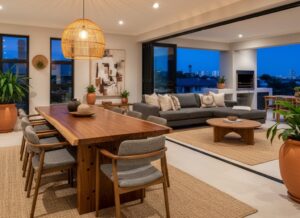
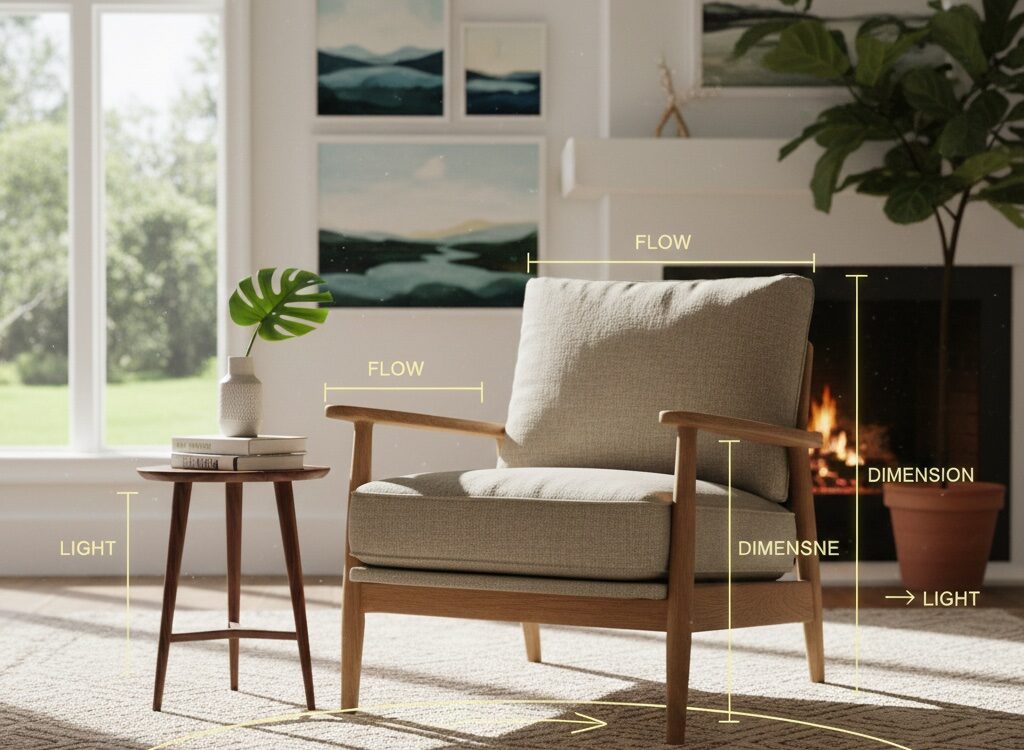
Once the human need and the quality of the piece are established, the focus shifts outward to the environment. This involves analysing the floor plan, natural light, and walking paths to identify design friction.
Design friction occurs when a piece of furniture interferes with the natural movement or visual balance of a space. For example, a large armchair in a tight corner can obstruct the flow of a room. By looking at the room from the inside out, furniture is positioned to maximise the potential of the square footage, making the space feel more intentional and open.
The Goal of Curation
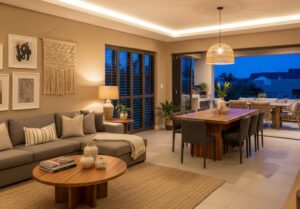
The objective of this method is to move away from matching sets and toward a collected home. A room feels most sophisticated when it appears to have evolved over time, blending craftsmanship with personal utility.
When a home is approached with an inside-out mindset, the focus moves away from simply acquiring objects. Instead, the emphasis is placed on how those objects interact with the architecture of the room to create a balanced atmosphere.