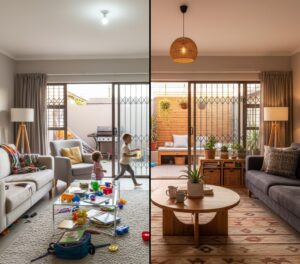
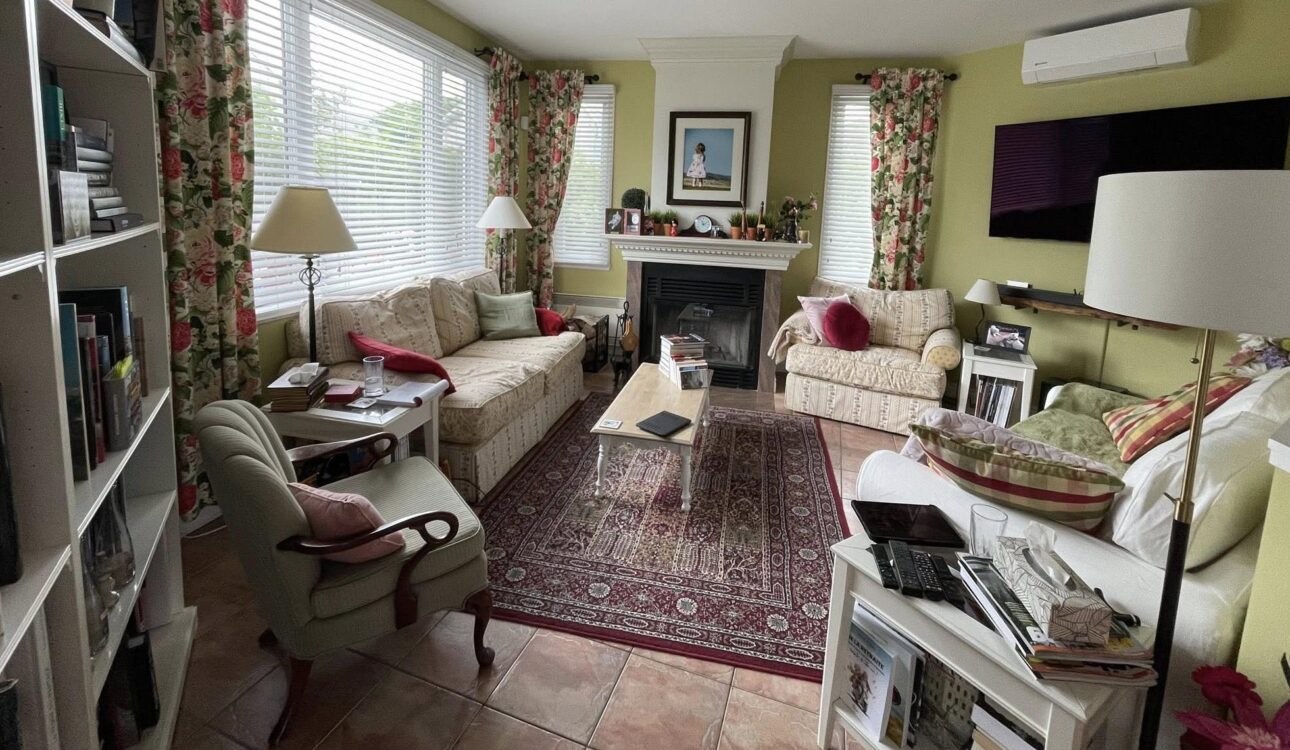
You are a professional who thrives on strategy, data, and efficiency in the boardroom. Yet, when it comes to your home, achieving that same level of polished execution feels elusive. You have a good eye, a definite sense of style, but your lounge or living area still leaves you with a nagging sense of “design fatigue.”
This is the challenge for the Time-Poor Pro in executive living. You instinctively know something is off, but constantly tweaking scatter cushions or moving a lamp does not solve the underlying issue. The true problem is a lack of design principles, turning your potential sanctuary into a source of subtle stress, and demonstrating why a house full of premium furniture can still feel like an unfinished project.
The Math of a Balanced Room
Designing a truly harmonious room is not just about aesthetics; it is about understanding the “math” of a balanced space. Think of it as the strategic framework that underpins successful design.
-
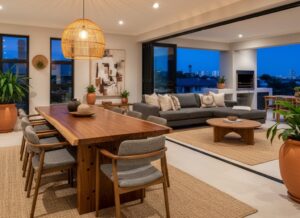
Proportion and Scale: This is about ensuring each piece of furniture relates correctly to the room’s dimensions and to other items. A large, beautiful timber dining table can overwhelm a smaller space, just as a tiny rug can get lost in a spacious lounge. Getting this wrong can make your room feel perpetually unbalanced.
-
Traffic Flow and Pathways: For a high-functioning home, especially in a South African context that values “Great Indoors” living, seamless movement is critical. The path from your kitchen to the stoep for a braai, or simply navigating the lounge, should be clear and intuitive. Obstructions create friction and stress.
-
Layered Lighting for All Occasions: Relying solely on overhead lights or a single “mood” lamp is a common pitfall. With loadshedding a reality, a well-designed room needs a strategic mix of ambient, task, and accent lighting that works both with and without electricity.
Removing the Guesswork
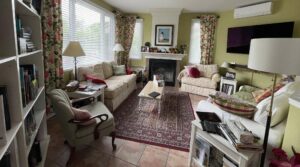
Without a curation principle, designing your home becomes a series of trial-and-error moments, leading to frustration and wasted effort. This is often why your living room feels cluttered despite your best intentions.
-
Beyond the “Showroom Trap”: Buying matching sets or impulse pieces from a showroom might seem efficient, but it rarely translates to a cohesive, functional home. It is often the showroom trap: why matching sets make your home feel smaller and less personal.
-
The Power of Purpose: Every item in a well-designed room has a purpose and a designated place. The Curation Principle removes the guesswork, ensuring that each piece contributes to the room’s balance and flow, rather than detracting from it.
-
A Sanctuary, Not a Project: For the time-poor professional, your home should be a place of respite from the demands of your career. Applying the curation principles means transforming your living areas from ongoing projects into truly finished, stress-reducing sanctuaries.
The Local Story: Nandi in a Cape Town City Bowl Apartment
Nandi, a successful corporate lawyer residing in a sleek Cape Town City Bowl apartment, found herself perpetually rearranging her lounge. She had invested in high-quality, modern pieces, including a striking timber console and a designer sofa. Yet, the space never felt quite right. The walk to her small balcony, which overlooked Table Mountain, felt awkward, and the overall impression was disjointed. She experienced a constant design fatigue.
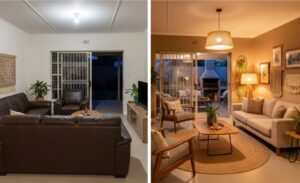
Her “Designer Gap” was attempting to achieve a high-end look without the foundational curation principle. She had great taste, but the pieces were not interacting strategically. By implementing spatial planning principles, Nandi rearranged her sofa to define conversational zones, allowing for clear pathways to the balcony. She introduced locally handcrafted scatter cushions and a strategically placed rug to anchor the seating area. The transformation was immediate. Her apartment, once a collection of beautiful items, became a fluid, functional, and deeply calming space, perfectly suited for executive living.
The “Aha!” Moment: Professional Results Come from a System
The ultimate realisation for the Time-Poor Pro is clear:
“Professional results come from a system, not just an ‘eye’ for design.”
Your innate design sensibility is an asset. But coupling it with a systematic approach to curation principles is what elevates a good room to a great one. It is about applying the same strategic thinking you use in your profession to create a home that truly serves your need for comfort, functionality, and calm. This systemic approach helps to eliminate design fatigue and ensures your executive living space is a true sanctuary.