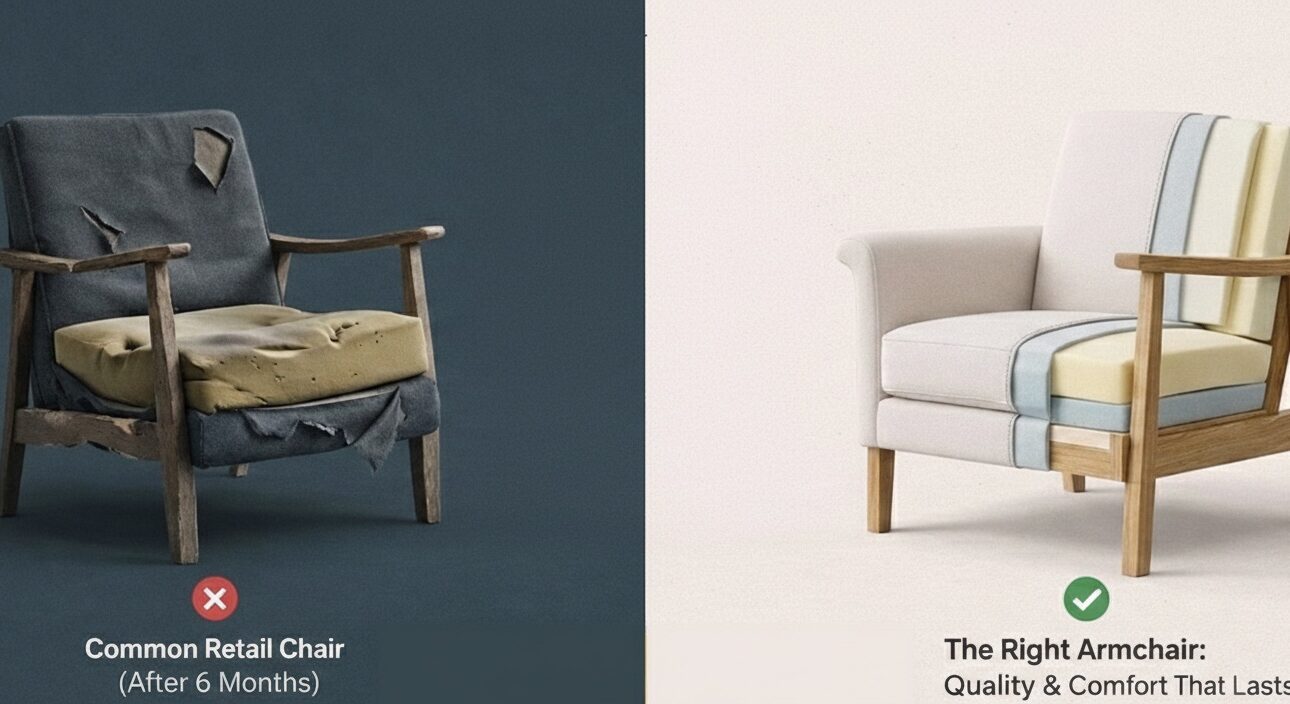
When furnishing a home, it is natural to look for ways to save money. However, there is a significant difference between a low price and true value. In the world of interiors, we often find that “cheap” furniture is actually the most expensive thing you can buy. This is because you pay for it twice: once with your money, and every day after with discomfort and the inevitable cost of replacement.
Understanding the furniture cost per year is the only financially literate way to furnish a home that lasts.
The Story of Thandi’s “Bargain” Armchair
A few years ago, a client named Thandi came to us after a frustrating experience. She had purchased a trendy, R5,000 armchair from a mass-market retailer. On the day it arrived, it looked great. But within twelve months, the “showroom” magic had faded. The foam had flattened, the fabric was pilling, and the frame developed a persistent squeak.
Thandi realised she couldn’t host guests comfortably, and she was already looking for a replacement. She had spent R5,000 on a piece that lasted only one year. When we calculated her furniture investment value, she realised she was on a path to spending R50,000 over the next decade just to keep a functional chair in that corner. By choosing a lower price tag, she had accidentally signed up for a cycle of waste.
Price Tag vs. Cost-Per-Year
To avoid Thandi’s mistake, you have to look past the initial checkout price. True luxury is defined by how a piece matures.
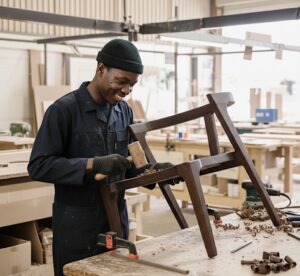
Consider a high-quality, handcrafted armchair built with a solid oakwood frame and high-density support. While the initial investment is higher, these pieces are designed to be 10-year assets.
-
The R5,000 Disposable Chair: Cost per year = R5,000 (assuming it lasts 1 year).
-
The R20,000 Heritage Chair: Cost per year = R2,000 (assuming it lasts 10 years).
When you look at the math, the “expensive” chair is actually 60% cheaper over time. This shift in thinking is a vital part of our Inside Out Method, where we prioritise structural integrity over temporary trends.
Why Quality is a Financial Decision
Investing in quality furniture isn’t just about aesthetics; it’s about durability. A piece with “Invisible Integrity” proper joinery and premium materials maintains its comfort level for a decade.
Before you make your next purchase, ask yourself if the piece is part of a simple space planning strategy or just a quick fix. Buying right the first time eliminates the “replacement tax” that most homeowners pay every few years.
By choosing pieces built for longevity, you turn your home into a collection of assets rather than a revolving door of disposables. It is the difference between simply spending money and truly investing in your daily comfort.